
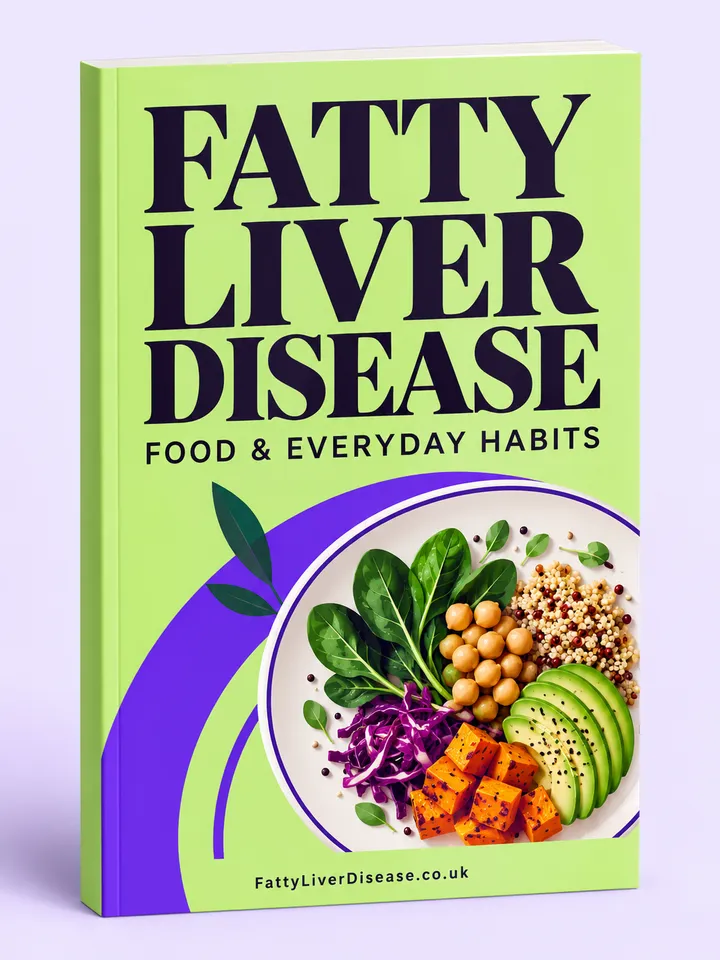
Start with a pattern, not a miracle food
Searching for a “fatty liver disease diet” can produce a confusing mix of strict rules, supplements and lists of foods to avoid. A more useful question is: what eating pattern can you sustain, and is it appropriate for your circumstances?
Clinical guidance on MASLD recommends improving diet quality, limiting sugar-sweetened drinks and reducing ultra-processed foods rich in sugar and saturated fat. A Mediterranean-style pattern is one evidence-based example. EASL–EASD–EASO clinical practice guidance provides the background for these recommendations.
That does not make one ingredient a cure. Nor does it mean everyone needs the same meals. Culture, budget, preferences and medical needs all affect a practical plan.
Make the everyday easier to understand
Before choosing a restrictive approach, observe your routine. When do you eat? Which meals are rushed? What do you drink regularly? What makes shopping and preparation difficult?
This is a learning exercise, not a test to pass. Write down a few ordinary examples without attaching blame. The point is to identify a manageable conversation with your healthcare team, rather than attempt a perfect diet overnight.
Useful questions include:
- Which changes would be most helpful in my situation?
- Can I speak to a dietitian?
- Does my medication affect how I should change my eating?
- Are there particular needs because of advanced liver disease?
What does a natural human diet mean here?
It is the educational idea behind our planned programme: looking closely at the relationship between food and the way we live. It is not a medical qualification, a standard clinical protocol or a guarantee of recovery.
The detailed approach will be explained in the course when it is ready. Public information should still give you a useful starting point now. Understanding evidence and asking informed questions should not depend on purchasing anything.
Keep changes appropriate to your health
General diet advice is not suitable for every stage of liver disease. Cambridge University Hospitals specifically advises people with cirrhosis or advanced disease to seek tailored advice. Read its MASLD nutrition information.
Check restrictive diets, fasting and supplements with your care team. If you have diabetes, take medication or have been given a specific nutrition plan, individual advice is particularly important.
Sources and further reading
- EASL–EASD–EASO clinical practice guidelines on MASLD
- Cambridge University Hospitals: nutritional information for MASLD
Next: can fatty liver disease improve? This article is general education and has not been independently medically reviewed.
Keep learning, with your care team involved.
Back to all articles